Koh Phangan vs Tulum: Which Is Right for You?
Two of the world's top yoga, wellness and beach destinations — Thailand's Full Moon Party island versus Mexico's Caribbean cenote coast. Here's an honest side-by-side to help you decide.
In this guide +
Koh Phangan and Tulum occupy a similar space in the global travel imagination: barefoot-chic beach towns where yoga retreats, plant-based food, spiritual events and late-night parties coexist a short walk from the ocean. Both draw a cosmopolitan crowd of wellness seekers, digital nomads, artists and long-term travellers. Both have evolved from backpacker secrets into globally recognised destinations while retaining — at least in parts — the rawer community feel that made them famous.
But they are on opposite sides of the planet. Koh Phangan sits in the Gulf of Thailand, accessed by ferry from the Thai mainland or Koh Samui. Tulum hugs the Caribbean coast of Mexico's Yucatán Peninsula. They share a vibe but not a geography, and the practical differences between a Southeast Asia budget trip and a Mexico Caribbean trip are significant. This guide is an honest comparison of both — beaches, wellness, diving, nightlife, cost and logistics — to help you decide which fits your trip best.
| Koh Phangan | Tulum | |
|---|---|---|
| Location & setting | Gulf of Thailand island, southern Thailand. Jungle interior rising to 627 m, ringed by distinct bays — party south-east, wellness west, quiet luxury north-east. Compact (~168 km²) but with real variety. | Caribbean coast of the Yucatán Peninsula, Mexico (Quintana Roo). Flat scrubland behind a narrow strip of white-sand beach. Famous for cenotes (inland freshwater sinkholes), Mayan clifftop ruins and turquoise shallow water. |
| Getting there | No airport. Fly into Koh Samui (high-speed catamaran roughly 30–45 min), or fly into Surat Thani / Bangkok and take a mainland ferry via Donsak pier (roughly 2–3 hours including the crossing). Ferry-only access is weather-dependent. | Tulum International Airport opened in 2024, bringing direct regional connections and reducing the previous reliance on Cancún airport (roughly 1.5–2 hours south by road). Domestic and regional routes are expanding; long-haul travellers still commonly route via Cancún or Mexico City. |
| Beaches & water | Multiple distinct beaches around a single island — fine sand at Thong Nai Pan, swimmable west-coast bays, party beach at Haad Rin. Water is warm year-round. Snorkelling at the Koh Ma sandbar and northwest reefs. | A continuous stretch of white-sand Caribbean beach with turquoise, usually calm water. Shallow seagrass beds limit swimming in some spots — beach quality varies significantly by section. The Great Mayan Reef (Mesoamerican Barrier Reef) lies offshore and is reached by boat for diving/snorkelling. |
| Yoga & wellness | One of Asia's most concentrated wellness destinations. The Sri Thanu and Hin Kong corridor runs daily drop-in yoga, breathwork, ecstatic dance, sound healing and multi-week retreats. Serious teacher trainings run year-round. | A globally recognised wellness destination, particularly strong for yoga, cacao ceremonies, biohacking and spiritual retreats. Concentrated in the Hotel Zone and La Veleta neighbourhood. Arguably more commercially developed and expensive than Koh Phangan's scene. |
| Unique experiences | Full Moon Party (monthly beach party at Haad Rin — unique globally). Sail Rock whale-shark diving. Dense jungle interior with waterfalls. A close-knit, multi-week expat and practitioner community. | Cenote swimming and diving (underground freshwater cave systems unique to the Yucatán). Tulum archaeological zone — Mayan ruins on a clifftop above the Caribbean. Day trips to Cobá, Bacalar and Chichén Itzá. |
| Diving & water sports | Open-water reef diving at Sail Rock — the Gulf's premier site, known for whale shark sightings. Shore snorkelling at Koh Ma and northwest coast. Kayaking, SUP and kitesurf at Ban Tai. | Cenote diving is world-class and unique to the region — halocline and cavern systems accessible to certified divers. Offshore reef diving via the Mesoamerican Barrier Reef. Fewer surface water sports than Koh Phangan. |
| Parties & nightlife | Monthly Full Moon Party at Haad Rin — the largest recurring beach party in South-East Asia. Half Moon Festival and Jungle Experience events in between. Quieter west-coast and resort areas are largely unaffected. | Known for boutique techno and electronic music events, open-air club nights and sunset beach parties. More of a curated, fashion-forward nightlife scene than a mass beach party. No equivalent to the Full Moon Party scale. |
| Budget & value | Very affordable by Western standards. Budget guesthouses and bungalows, low-cost street food and market meals, wallet-friendly yoga classes and massage. Monthly villa rentals are genuinely accessible for mid-range travellers. | Significantly more expensive than Southeast Asia — hotel-zone accommodation, restaurant bills and retreat prices are priced closer to European or US levels. Budget travel is possible away from the main strip but Tulum has shifted upmarket in recent years. |
| Food & drink | Excellent Thai street food, fresh seafood, strong vegan and plant-based scene (especially Sri Thanu), international café culture. Night markets in Thong Sala for cheap, authentic eating. | Strong plant-based and raw food scene alongside quality Mexican cuisine. Trendy beach restaurants and juice bars. Fresh fish tacos and ceviche widely available. High-end dining well represented — food costs more than Thailand overall. |
| Best for | Wellness and yoga retreats on a tight budget, the Full Moon Party experience, open-water diving at Sail Rock, long stays and digital nomads, travellers who want beach and jungle in compact range. | Cenote exploration, Mayan archaeological sites, the bohemian Caribbean beach aesthetic, travellers combining wellness with Mexican culture and cuisine, higher-budget wellness and retreat experiences. |
| Season | Gulf of Thailand: calm and dry Dec–Apr; wetter and rougher Sep–Nov. The Full Moon Party runs every month regardless of season. | Caribbean: dry and sunny Nov–Apr; hurricane season Jun–Nov, with August–October carrying the most risk. Water is warm year-round. Cenotes are accessible throughout the year and unaffected by weather. |
These are two different continents (Southeast Asia vs the Americas), so the choice significantly affects flight logistics, visa requirements, currency and overall travel cost. Both are genuinely world-class destinations for yoga, wellness and beach culture.
The settings: Gulf jungle island vs Caribbean cenote coast
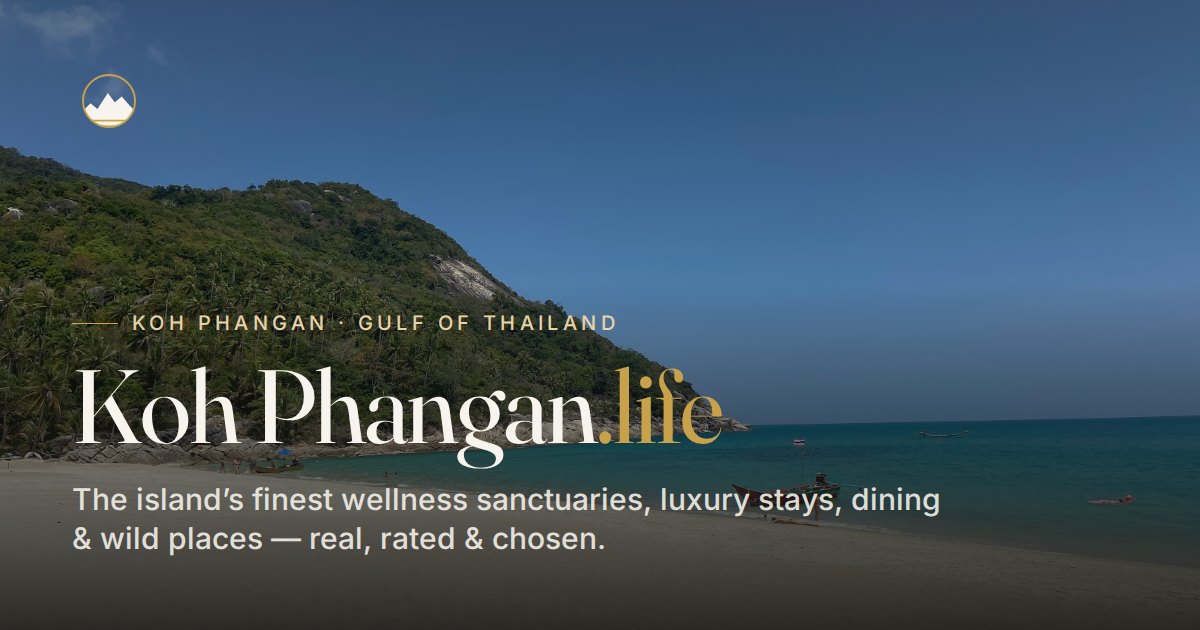
Koh Phangan is a single island of about 168 square kilometres in the Gulf of Thailand. It has real topography — a jungle interior that rises to 627 metres, multiple distinct bays with different personalities, a small town at Thong Sala, and roads that wind through coconut palms and dense forest. The island rewards exploration because the north-east bays feel nothing like the party south-east, and the wellness west coast is another world again. Getting around requires a scooter or songthaew ride.
Tulum is a coastal strip rather than an island — a narrow section of the Quintana Roo coast where a white-sand Caribbean beach is backed by flat scrubland. The town (Tulum Pueblo) sits a few kilometres inland from the beach hotels (the Zona Hotelera). The terrain is flat, the vegetation low. What Tulum has that Koh Phangan doesn't is geological drama underground: the Yucatán Peninsula sits on a vast network of limestone caves flooded with freshwater, forming cenotes — natural sinkholes and cavern pools — that are unlike anything in Thailand. And just offshore lies the Mesoamerican Barrier Reef, the second-largest reef system in the world.
Both settings are genuinely beautiful. Koh Phangan's appeal is the combination of beach and jungle in tight range; Tulum's is the beach plus unique underground water world plus the clifftop Mayan ruins that overlook the sea.
Getting there and logistics
Getting to Koh Phangan requires a ferry leg no matter where you arrive from. Most visitors fly into Koh Samui — the nearest airport, with connections from Bangkok, Singapore and a handful of other Asian cities — then take a high-speed catamaran (roughly 30 to 45 minutes). Alternatively, flights into Surat Thani on the mainland connect to ferry services from Donsak pier, a longer crossing of around two hours or more. There is no airport on Koh Phangan and no bridge. Ferry schedules can be disrupted in rough weather, particularly during the October–November wet season.
Tulum opened its own international airport — Tulum International Airport — in 2024, significantly improving access. Previously, almost all visitors arrived via Cancún (roughly 130 kilometres north) and took a shared shuttle or taxi south, a journey of one and a half to two hours depending on traffic. The new airport is expanding its route network, so options continue to improve. For visitors arriving from Europe or the Americas, Tulum is generally easier to reach than Koh Phangan. For travellers already in Southeast Asia, Koh Phangan is the simpler option.
On-island transport differs too. Koh Phangan is large enough to need wheels — a scooter rental or regular songthaew rides to move between beaches and areas. Tulum's hotel zone is more walkable, though distances between the beach strip, the town and the cenotes are far enough that a bicycle, scooter or taxi is useful.
Beaches and water
Koh Phangan's beaches vary significantly by location. The north-east bays — Thong Nai Pan Noi and Yai — are widely considered the most beautiful: two linked horseshoe bays with soft white sand, clear water and a quiet, unhurried atmosphere. The west coast bays (Sri Thanu, Haad Chao Phao, Haad Yao) face the sunset and have calm, swimmable conditions for most of the year. Haad Rin, in the south-east, is the Full Moon Party beach — a long strip of sand that hosts tens of thousands of people on party nights and is considerably quieter between them. The north has the Koh Ma sandbar and some of the best snorkelling on the island.
Tulum's beach is a single long, continuous Caribbean strip — bleached white sand, turquoise shallow water, calm most of the year. The water is generally clear and the setting is photogenic. However, seagrass beds are widespread and limit swimming in some sections; beach quality varies depending on which stretch you're in. Tulum's beach has also experienced recurring sargassum (seaweed) influxes in recent years, which affects conditions seasonally — this is a Caribbean-wide phenomenon rather than specific to Tulum, but it's worth checking current reports before visiting.
For pure swimming variety and consistency, Koh Phangan's range of bays is an advantage. For the specific Caribbean palette — turquoise flat water, white sand — Tulum delivers the archetype.
Yoga, wellness and retreats
Both destinations are among the world's most recognisable wellness hubs, but they have different characters.
Koh Phangan's scene concentrates along the west coast — particularly the Sri Thanu and Hin Kong corridor — and has the feel of a lived-in community rather than a commercial district. Drop-in classes in vinyasa, yin, ashtanga and aerial yoga happen multiple times daily at a cluster of shalas and studios. Alongside the yoga, there is a dense offering of breathwork workshops, ecstatic dance nights, sound healing sessions, cacao ceremonies, somatic therapy and multi-week detox retreats. The price point is generally low: daily yoga classes, massage and organic meals remain affordable, making extended stays genuinely practical. Teacher training programmes — 200-hour, 300-hour and specialist formats — run year-round and attract practitioners from around the world.
Tulum's wellness scene has grown very quickly in the last decade and is now commercially significant — boutique yoga shala businesses, high-end retreat programmes and internationally marketed teacher trainings sit alongside more local offerings. Cacao ceremonies and plant medicine retreats are prominent. The Instagram-friendly aesthetic is well developed here: beachfront shalas, crystalline cenote meditation pools, clean-eating restaurants. The quality ceiling is high, but so is the price — the same week-long retreat that would cost one amount in Koh Phangan will typically cost considerably more in Tulum. Long-term stays in the hotel zone are expensive; those who come for extended wellness work often base themselves inland where costs are more manageable.
For budget-conscious wellness travellers and those wanting community depth over commercial polish, Koh Phangan generally wins. For those who want the Latin wellness aesthetic, cenote integration and don't mind the cost, Tulum is the more natural fit.
Diving, cenotes and water activities
The underwater experiences are genuinely different — and both are world-class in their own category.
Koh Phangan's headline diving destination is Sail Rock (Hin Bai), a submerged pinnacle rising from the open Gulf between Koh Phangan and Koh Tao. It is one of the Gulf of Thailand's best dive sites and one of the more reliable locations in the region for whale shark encounters. Visibility can be excellent. The dive centre hub is Chaloklum on the north coast, from where boats depart for Sail Rock and the surrounding Gulf sites. Shore snorkelling at the Koh Ma sandbar, where a thin sandbar connects the beach to a small offshore island, is a good introduction to the local reef life.
Tulum offers two distinct types of diving. Cenote diving — inside the Yucatán's underground cave systems — is genuinely unique to this part of the world and has no equivalent in Thailand. Certified divers can explore haloclines (where fresh and salt water meet and create a visual distortion), ancient cave formations and crystal-clear passages. It is an extraordinary experience for those who have never done it. Offshore, the Mesoamerican Barrier Reef provides open-water reef diving via day trips from Tulum's coast. The reef is large, well-preserved in sections and supports diverse marine life. Surface water activities are more limited here than on Koh Phangan, where kitesurf, SUP, kayaking and boat trips are all well-organised.
For open-water reef diving and whale sharks, Koh Phangan and the Gulf have the edge. For cenote diving specifically, Tulum is simply unmatched — it is not available anywhere else.
Parties and nightlife
The Full Moon Party has made Koh Phangan globally famous: a monthly all-night beach party at Haad Rin, timed to the full moon, with multiple sound stages, fire shows, neon paint and crowds that have numbered in the tens of thousands in peak season. It is the largest regular beach party in South-East Asia and there is nothing quite like it anywhere else. Between full moon nights, the island also runs the Half Moon Festival (a smaller jungle and beach party) and the Jungle Experience events, which create a frequent rolling party calendar. The party scene is geographically contained — Haad Rin's energy doesn't reach the wellness west or the quiet north-east — so non-party travellers can avoid it entirely.
Tulum's nightlife is a different register: boutique electronic music events and techno nights, often in open-air jungle or beach venues, with a fashion-forward international crowd. It has become a significant destination on the global festival circuit. These events are curated and often ticketed in advance; the atmosphere is more selective and design-conscious than the inclusive free-for-all of the Full Moon Party. For travellers who want electronic music in beautiful surroundings, Tulum's scene is genuinely exciting. For those drawn specifically to the Full Moon Party experience — raw, large-scale, monthly — only Koh Phangan delivers it.
Budget and value
This is one of the clearest practical differences between the two destinations.
Koh Phangan remains very affordable by Western standards. A daily budget covering a comfortable guesthouse or simple villa, three meals, a yoga class and a massage is achievable for less than many travellers spend on accommodation alone in Tulum. Street food in Thong Sala's night markets is genuinely cheap; drop-in yoga sessions and Thai massage are among the better-value wellness experiences you'll find anywhere; and monthly villa rentals in Sri Thanu or Ban Tai are accessible for mid-range budgets. The low cost of daily life is one reason practitioners and nomads stay for months rather than weeks.
Tulum has shifted significantly upmarket. The hotel zone's boutique properties, beach clubs and health-focused restaurants charge prices that reflect a Caribbean premium; costs comparable to Southern Europe or parts of the United States are common. Budget travel is possible in Tulum Pueblo itself (the inland town rather than the beach strip) and in the surrounding areas, but visitors expecting Southeast Asian prices will be surprised. The higher cost is partly the genuinely beautiful setting and partly the Instagram-driven premium that has developed around the Tulum brand.
For cost-conscious travellers, families on a budget or anyone wanting to stay for an extended period without significant financial stress, Koh Phangan is the clearer choice.
Food and eating
Both destinations have strong, distinct food scenes shaped by their wellness identities.
Koh Phangan's food culture is anchored in Thai street cooking — pad thai, curries, grilled seafood and fresh fruit smoothies at beach-facing shacks and night-market stalls form the affordable daily staple. Layered on top of this is a serious plant-based and raw food scene concentrated in Sri Thanu and Haad Yao, where smoothie bowls, vegan wraps and açaí dishes sit alongside excellent, cheap Thai food. The café culture has developed considerably, with quality espresso and working space increasingly common. International options — Italian, Indian, Japanese, Lebanese — are well represented in the main areas.
Tulum's food culture leans into Mexican cuisine, plant-based eating and a raw/superfood aesthetic. Fresh fish tacos, ceviche, esquites and cochinita pibil are excellent and widely available. The vegan and raw-food scene is substantial and well-developed, with the Yucatán's tropical produce giving local organic dishes a different but equally interesting character to Thailand's. High-end beach restaurants represent a significant dining tier that Koh Phangan's food scene doesn't quite match — but those meals come at cost. For straightforward eating and value-for-money, Koh Phangan has the edge; for culinary variety and the opportunity to eat well across different price points, both deserve credit.
Which is right for you?
Choose Koh Phangan if: budget matters and you want to spend more on experiences than on accommodation and meals; the Full Moon Party is a goal or a curiosity worth ticking off; you want open-water reef diving or specifically the chance to see whale sharks at Sail Rock; you prefer a tight-knit barefoot community for yoga and wellness rather than a commercial retreat market; or you are already in Southeast Asia and want the best of Thailand's beach and wellness islands in one compact place.
Choose Tulum if: cenote diving or swimming is a primary draw and you want an experience genuinely unavailable elsewhere; the Mayan cultural sites (Tulum ruins, Cobá, Chichén Itzá) are part of your trip; you want the Caribbean beach aesthetic with flat turquoise water and white sand; a curated boutique electronic music scene appeals more than the Full Moon Party's scale; or you are coming from the Americas or Europe and the shorter flight is a practical advantage.
Both are places people return to. Both reward slowing down. The honest answer is that the choice often comes down to where you already are and which continent fits your trip — rather than one being definitively better than the other.
Good to know
- Is Koh Phangan or Tulum more expensive? +
- Koh Phangan is considerably more affordable. Daily costs for accommodation, food, yoga and activities in Koh Phangan are significantly lower than comparable spending in Tulum's hotel zone. Tulum has moved upmarket in recent years; budget travel is possible inland but the beach-strip experience comes at a Caribbean premium. For long stays and tight budgets, Koh Phangan is the clearer choice.
- Can you do both Koh Phangan and Tulum on the same trip? +
- Technically yes, but practically they are on opposite sides of the planet, so combining them involves significant intercontinental flights and makes more sense as two separate trips than a single itinerary. Some travellers plan a Southeast Asia trip including Koh Phangan one year and a Mexico/Caribbean trip including Tulum another. The two share a vibe — yoga, beach, wellness, digital nomad community — but swapping them in and out of a single journey adds expense and travel time that's hard to justify unless one leg is a brief stopover.
- Is Tulum good for diving? +
- Yes, but for a different style of diving than Koh Phangan. Tulum's signature diving is inside the Yucatán cenotes — flooded cave systems with crystal-clear freshwater, haloclines and dramatic geological formations. This is world-class and genuinely unique to the region. Offshore reef diving on the Mesoamerican Barrier Reef is also available by boat. For open-water reef diving and whale sharks, Koh Phangan and the Gulf of Thailand (particularly Sail Rock) are the stronger option.
- Which has a better yoga scene: Koh Phangan or Tulum? +
- Both are globally recognised yoga destinations, but they have different characters. Koh Phangan's Sri Thanu corridor is community-oriented and affordable, with drop-in classes daily and a close-knit long-stay practitioner community. Tulum's scene is more commercial and fashion-forward, with higher price points and strong Instagram visibility. For year-round daily practice at a lower cost with genuine community feel, Koh Phangan is generally preferred by serious long-term practitioners. For the aesthetics, the cenote integration and the Latin-inflected wellness culture, Tulum has its own distinct appeal.
- When is the best time to visit Koh Phangan vs Tulum? +
- For Koh Phangan: December to April is the dry season with calm seas and reliable sunshine. May to August is warm with occasional rain. September to November is the wettest period. For Tulum: November to April is the dry season on the Caribbean coast — calm, sunny and the most reliable for beach and cenote visits. The Caribbean hurricane season runs June to November, with August to October carrying the highest risk of tropical storms. Both destinations have a year-round tourist infrastructure and the Full Moon Party runs every month on Koh Phangan regardless of season.
Last updated 7 July 2026 · places shown are real listings with live Google ratings.