Skip to content
Koh Phangan · Freediving

Freediving on Koh Phangan
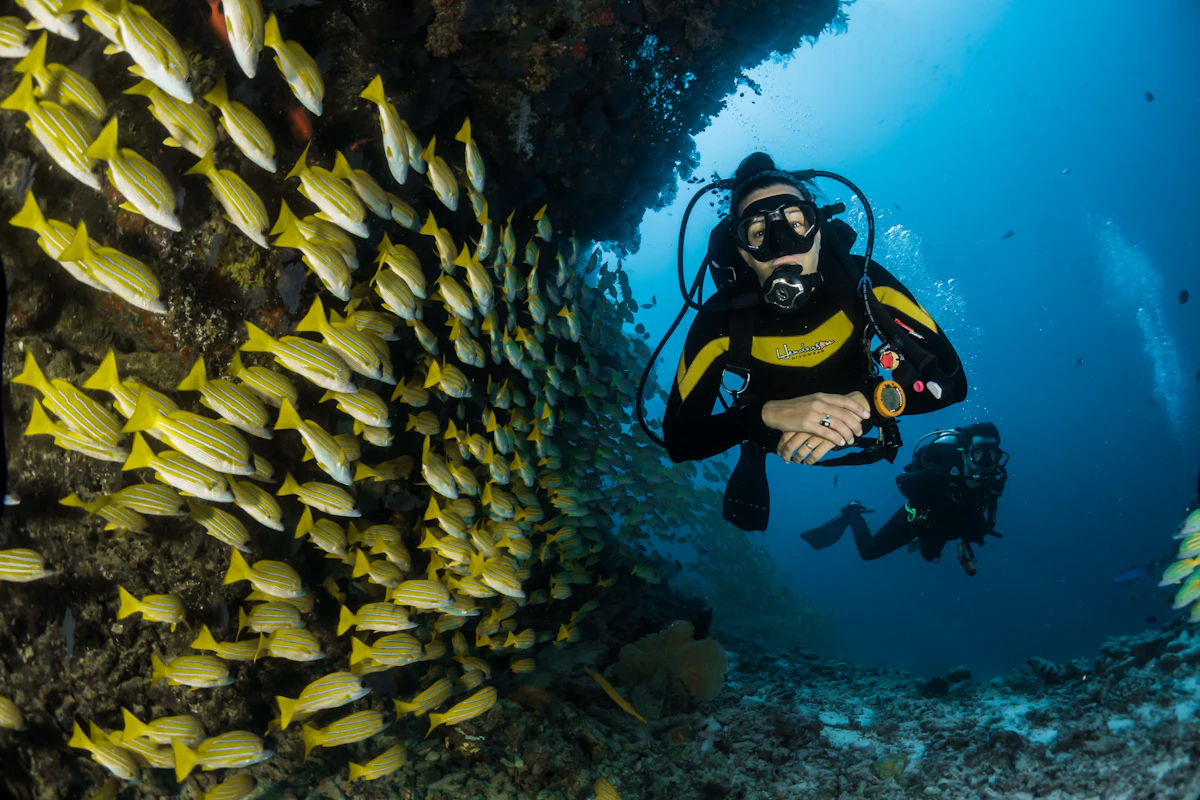
Freediving and underwater exploration in the clear waters of Koh Phangan

Freediving — diving on a single breath, without tanks — has found a natural home on Koh Phangan. The island already draws people for yoga, breathwork and the kind of slow, intentional travel that pairs well with a discipline built around relaxation and body awareness. Add the warm Gulf of Thailand water, the Koh Ma reef for accessible shallow practice, and access to the offshore seamounts via the island's established dive fleet, and you have an unusually complete setup for the sport.

Courses are available for complete beginners through to more experienced practitioners looking to develop depth skills. For visitors who want an underwater experience without enrolling in a full course, the Koh Ma reef offers the island's best shore-entry snorkelling — and a first taste of what it feels like to drop below the surface in calm, clear water.

Freediving on Koh Phangan

No tanks · Breath-hold diving · AIDA & SSI

The basics — what freediving actually is

Freediving is diving on a single breath — no scuba tank, no regulator, just a controlled breath-hold and a descent. Courses typically start in a pool or shallow-water setting to build comfort with equalisation and breath-holding, then move to open-water dives from a boat or platform. International certifications (AIDA and SSI are the main bodies) are structured in levels, with the beginner level usually requiring a two to three day commitment. The first course is the steepest learning curve; after that, improvement comes quickly with practice.

Diving & snorkelling guide →
Warm water · Clear reefs · Offshore depth

Why Koh Phangan suits freediving

The Gulf of Thailand around Koh Phangan is warm year-round, which makes extended water time comfortable without a thick wetsuit — an advantage for beginners working on technique. The reef at Koh Ma and the northwest coast gives shallow, clear water for entry-level dives and skills practice. For deeper open-water sessions, the dive boats running to Sail Rock and the local offshore pinnacles access water deep enough for more advanced training. The same routes used by scuba operators serve freediving courses from the same island.

Koh Ma — best snorkelling →
Sri Thanu · Wellness community · Pranayama

Breathwork and the yoga connection

Koh Phangan has one of the densest concentrations of yoga studios and breathwork teachers in Southeast Asia, particularly in the Sri Thanu and Haad Yao areas. Freediving and pranayama training overlap significantly — both work with diaphragmatic breathing, breath retention and the relaxation response, so a yoga or meditation background gives a genuine head start in the water. Many visitors to the island combine a beginners' freediving course with yoga sessions during the same week, treating both as complementary practices.

Yoga on Koh Phangan →
Northwest coast · Sail Rock · Ang Thong

Best sites — Koh Ma reef and offshore

Koh Ma's fringing reef, reached from the beach at low tide, is the starting point for most introductory underwater sessions — shallow, calm and full of fish, it shows what freediving is for in the most accessible setting. For advanced freedivers looking for depth and blue-water experience, the offshore seamount at Sail Rock and the Ang Thong Marine Park islands to the west offer boat-accessed sites with serious depth and blue water. Dive operators in Chaloklum run day trips to both; many accept freedivers alongside scuba groups.

Best underwater spots →
Dive operators

Diving & water sports on the island

Guides for underwater explorers

Guide

Diving & Snorkelling on Koh Phangan

Koh Phangan is the quiet gateway to Sail Rock, the Gulf of Thailand's best dive site, with a whale-shark pinnacle and a famous swim-through chimney. Here's the dive scene, day trips, PADI courses and the snorkelling spots that are worth your time.

Read guide →
Guide

Best Snorkelling Spots on Koh Phangan

Koh Phangan has more shore-entry snorkelling than its party reputation suggests — from the protected Koh Ma reef in the northwest to Coral Bay on the north coast and the fringing reef at Haad Salad. This guide ranks the best spots by quality, access and what to expect in the water.

Read guide →
Guide

Best Dive Sites on Koh Phangan

A site-by-site guide to diving and snorkelling around Koh Phangan — from Sail Rock, the Gulf of Thailand's flagship seamount, to the accessible reef at Koh Ma and the shore-entry coral at Haad Khom — with honest advice on what each site offers and who it suits.

Read guide →
Guide

Yoga & Wellness Retreats on Koh Phangan

Koh Phangan is one of Southeast Asia's most established wellness destinations — a year-round scene of yoga teacher trainings, silent retreats, breathwork immersions and drop-in classes centred around Sri Thanu on the west coast. Here's how to find the right experience for where you are.

Read guide →
Guide

Island Hopping & Day Trips from Koh Phangan

Koh Phangan's central position in the Gulf of Thailand puts Koh Tao, Ang Thong Marine Park and Koh Samui all within a day-trip's reach. Here's where to go, what you'll find, and how to book each trip.

Read guide →
Guide

Koh Phangan Water Sports: Kitesurfing, Kayaking & Paddleboarding

From IKO kitesurfing courses on the flat south-coast shallows to sea kayaking the limestone channels of Ang Thong Marine Park — here's everything Koh Phangan offers above the waterline.

Read guide →

Freediving on Koh Phangan, answered

Is Koh Phangan a good place to learn freediving?
+
Yes. The warm, calm Gulf of Thailand water makes for a comfortable learning environment, the island has a year-round community of water sports operators and instructors, and the Koh Ma reef on the northwest coast provides an ideal shallow-water training site. The broader wellness culture — yoga, breathwork and meditation are all very established here — also means many visitors already have the mental and breathing foundations that make freediving progress faster.
What certification do you get from a freediving course?
+
The two main international bodies are AIDA (Association Internationale pour le Développement de l'Apnée) and SSI (Scuba Schools International). Both structure courses in levels, starting with a beginner course that covers pool or confined-water skills and open-water dives to a modest depth. Completing either beginner-level certification is internationally recognised and allows you to dive with freediving clubs and operators worldwide. Check with the specific school you're interested in for which certification system they teach.
Do I need to know how to scuba dive first?
+
No. Freediving is a completely separate discipline from scuba — it uses different techniques, different equipment and a different mindset (relaxation rather than controlled breathing). There is no crossover requirement. Many freedivers have never scuba dived and many scuba divers take up freediving as a separate practice. A swimming ability and comfort in the water are the main prerequisites for a beginner course.
Is freediving safe for beginners?
+
Recreational freediving courses from accredited instructors are structured to introduce breath-holding progressively in a supervised environment. The most important safety rule — never freedive alone — is drilled into every course from the first session. Supervised two-person or group sessions with a qualified instructor are how all beginner freediving is done. Physical contraindications (certain ear, sinus and heart conditions) are screened before courses, so a medical self-declaration is standard. As with any water sport, safety depends heavily on following the rules you're taught.
What is the best time of year to freedive at Koh Phangan?
+
Conditions are generally at their best from November to April, when the Gulf is calmer and underwater visibility tends to be highest. The Koh Ma reef is diveable year-round in clear conditions, but the dry season gives the most reliable visibility for offshore dives. The wetter months (May to October) still see activity, particularly for pool-based or shallow-water training, but boat trips to deeper sites are more weather-dependent.
How does freediving differ from snorkelling?
+
Snorkelling involves floating at the surface and breathing through a tube, with occasional shallow breath-hold dips. Freediving is structured breath-hold diving — deeper, longer and with a focus on technique, equalisation and the physiology of breath retention. A trained freediver can reach depths and durations far beyond casual snorkelling, though the beginner entry point is very accessible. The Koh Ma reef is a destination where people do both: snorkellers at the surface and freedivers dropping down to the coral.

Explore more underwater

Live · weather & clocks

Koh Phangan

HQ

Thailand

--:--:--

–°

Berlin

Germany

--:--:--

–°

New York

USA

--:--:--

–°

Bali

Indonesia

--:--:--

–°

Sydney

Australia

--:--:--

–°