Freediving on Koh Phangan: Breath-Hold Diving in the Gulf of Thailand
Koh Phangan sits at the centre of one of Southeast Asia's best underwater environments for breath-hold diving. This guide covers where to freedive around the island, how to get started with a course, what the water conditions are like through the year, and how the island fits into a wider Gulf of Thailand freediving trip.
In this guide +
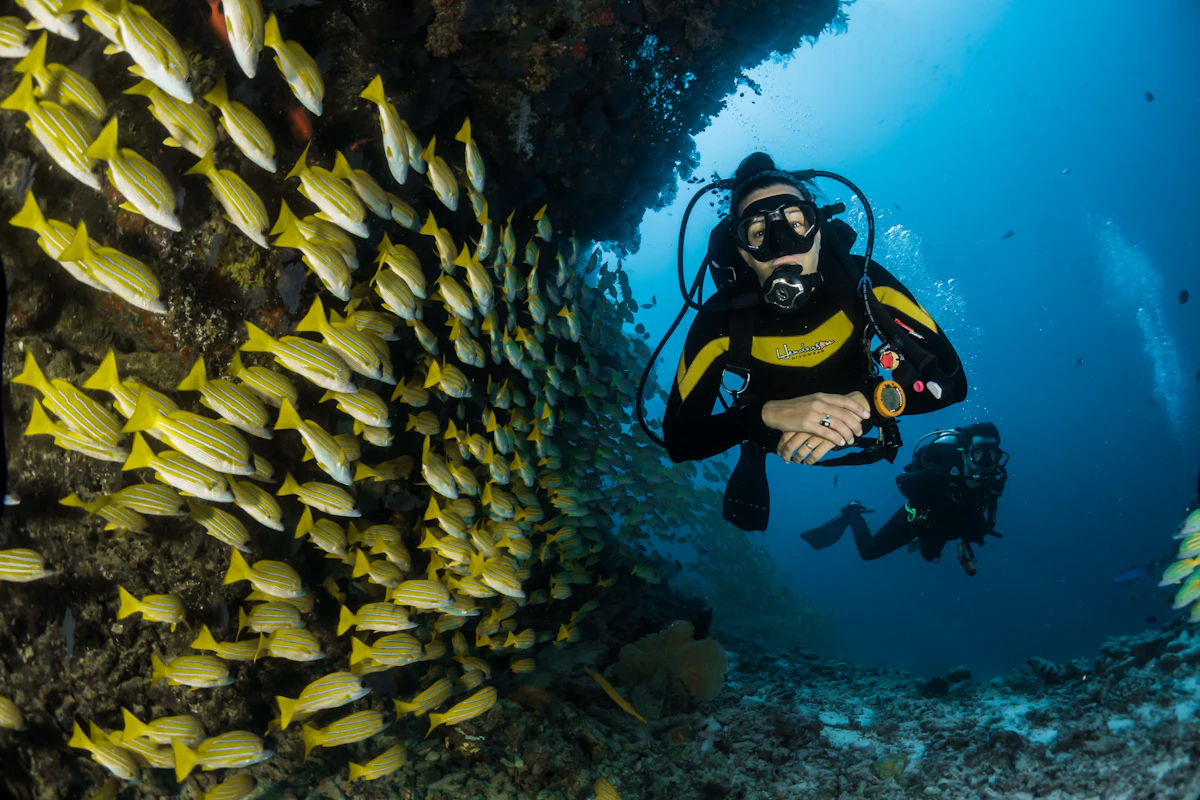
Freediving — breath-hold diving without tanks — is one of the fastest-growing water sports in Southeast Asia, and the Gulf of Thailand is one of its best training grounds. Koh Phangan sits in the middle of it: warm, calm water for much of the year, easy reef access from several beaches that require no boat at all, and a position midway between Koh Tao to the north (the region's most established freediving hub) and the mainland to the west. Whether you want to learn the basics, develop an existing breath-hold practice, or simply extend your snorkelling into something more intentional and immersive, Koh Phangan offers a credible base.
Freediving is neither the same as scuba diving nor just advanced snorkelling. It is a breath-based practice that combines physical technique — efficient equalisation, a relaxed body position, an unhurried fin kick — with a degree of mental stillness that is genuinely unlike any other water sport. Beginners can learn safely within a formal course. Done correctly and with a buddy, it is one of the most meditative things you can do in open water, and the silence of it — no tank noise, no bubbles, no buoyancy compensator — transforms the way reefs and open water feel.
Why Koh Phangan works for freediving
Several things line up in the island's favour. The water temperature stays warm throughout the year, which means long sessions without a thick wetsuit. The Gulf of Thailand, on the island's west and north coasts especially, is calmer and shallower than the open Andaman Sea — conditions that suit beginner practice without the surge and chop of more exposed coastlines. The island's west-coast reef systems at Koh Ma, Haad Salad and Haad Yao are accessible from the shore at high and mid tide, which means you can practice without booking a boat.
Koh Phangan also has a quality-of-life advantage: it is a small, unhurried island with good food, yoga studios, and a wellness culture that aligns well with the breath-training and mindfulness aspects of freediving. Many people find the combination of morning yoga, ocean practice and relaxed evenings suits a freediving trip far better than a busier dive destination. And if you want dedicated multi-day freediving instruction, Koh Tao — the region's most established freediving centre, with several accredited schools — is a short ferry ride north.
The best freediving spots around Koh Phangan
Koh Ma, the tiny uninhabited island connected to Mae Haad beach by a low-tide sandbar, is the island's standout freediving and snorkelling site. The protected reef around Koh Ma holds healthy coral and reef fish in clear, sheltered water — conditions that suit breath-hold diving well, since the lack of current allows longer, easier dives. The shallow entry zone over the sandbar lets you ease in and equalise before reaching the reef. Low tide is when the sandbar walk is possible; plan your session around mid-to-high tide for the best depth over the reef.
Haad Salad, on the west coast just north of Haad Yao, has a fringing reef roughly 100 metres offshore. The bay is well-sheltered and the water stays clear in dry-season conditions, making it one of the more consistent spots for shore-entry freediving on the west coast. Snorkel gear is available to rent nearby.
Haad Yao has an offshore reef and an established dive centre — freediving at the reef here means calm conditions and easy access from the beach, with the option of linking up with the dive centre for local knowledge on conditions and sites.
For more advanced or experienced freedivers, Sail Rock — the seamount between Koh Phangan and Koh Tao, reached by a boat trip from Chaloklum — is the Gulf of Thailand's signature dive site. The Chimney, a vertical swim-through that rises through the pinnacle, is a classic feature. Sail Rock is a serious open-water site with significant depth and occasional current; it is not suitable for beginners and the crossing from Chaloklum takes around an hour or more.
Koh Ma Snorkel & Sandbar Tour
Walk the famous sandbar and snorkel the island’s best reef.
Haad Yao Divers
Haad Yao Divers is a scuba diving center at Haad Yao beach on the west coast of Koh Phangan.
Blue Horizon Diving
Blue Horizon Diving is a scuba diving and snorkeling center in Mae Haad on the northwest coast of Koh Phangan.
Sail Rock Divers
A PADI scuba diving center on Koh Phangan running guided dive trips and courses to Sail Rock (Hin Bai).
Getting started: courses, certifications and what to expect
If you are new to freediving, a formal beginner course is the safest and most effective way to begin. The two main certification bodies are AIDA International (Association Internationale pour le Développement de l'Apnée) and SSI Freediving, and both have training centres across the region. A typical beginner programme — AIDA1 or SSI Level 1 — covers the theory of breath-hold physiology, equalisation technique, basic pool or confined-water practice, and introductory open-water dives. Most are completed in one to two days.
Koh Tao, roughly an hour north by ferry, is the Gulf of Thailand's main freediving hub and has the densest concentration of accredited freediving instructors and schools in the region. For a structured multi-day course with daily open-water sessions, it is worth combining a few days on Koh Phangan with a dedicated training block on Koh Tao. Koh Phangan's dive centres at Chaloklum and Haad Yao can advise on current operators and help with timing around sea conditions.
For those who already hold a beginner certification, Koh Phangan's reef sites offer practical open-water dives without the need for a formalised course. Check in with one of the local dive centres before heading out independently — they will tell you the current state of sites, any seasonal changes in conditions, and whether a buddy or guide is recommended.
Chaloklum Diving
Chaloklum Diving is a PADI dive school and scuba operator in Chaloklum on the north coast of Koh Phangan.
Haad Yao Divers
Haad Yao Divers is a scuba diving center at Haad Yao beach on the west coast of Koh Phangan.
TDB Dive Center Koh Phangan
TDB Dive Center is a scuba diving operator in Chaloklum on the north coast of Koh Phangan.
Freediving, snorkelling and scuba: which one suits you
All three are valid ways to explore Koh Phangan's reefs, and the choice depends more on what you want from the experience than any hierarchy of skill.
Snorkelling is the most accessible: no training required, gear is cheap to rent everywhere, and you can do it in the shallows at Koh Ma or Haad Salad on your first morning. It works best on the surface, watching the reef from above.
Freediving takes you into the water column — down to the reef, eye level with fish, able to hover at the same depth as the coral. The trade-off is that it takes training to do safely and breathe efficiently, and you absolutely need a buddy in the water. But the payoff — the silence, the intimacy with the reef, the meditative quality of a long clean descent — is something snorkelling from the surface cannot replicate.
Scuba diving is the right choice if you want extended bottom time, the ability to explore at depth regardless of breath-hold ability, or access to sites like Sail Rock that are simply too deep and far from shore for most freedivers. Koh Phangan's dive centres at Chaloklum and Haad Yao run regular boat trips to Sail Rock and are the right starting point for anyone wanting to try scuba.
Chaloklum Diving
Chaloklum Diving is a PADI dive school and scuba operator in Chaloklum on the north coast of Koh Phangan.
Haad Yao Divers
Haad Yao Divers is a scuba diving center at Haad Yao beach on the west coast of Koh Phangan.
Safety: what every freediver needs to know
The fundamental rule of freediving is simple and absolute: never freedive alone. The greatest risk in freediving — shallow water blackout, a sudden loss of consciousness caused by hypoxia during ascent — can happen to experienced divers without warning and is almost always fatal without an immediate rescue by a nearby buddy. Always freedive with a trained buddy who stays at the surface watching you and is ready to act.
Equality of breath and relaxation are the twin technical foundations of safe freediving. Fighting the urge to breathe, pushing past discomfort, or feeling anxious all increase the risk of blackout. The counterintuitive lesson of freediving instruction is that calm — genuine, practiced physiological calm — is what extends your dive time safely, not willpower or raw breath capacity.
In practical terms for Koh Phangan: sea conditions can change faster than forecast, especially during the shoulder seasons either side of the dry-season window. Always check local conditions with a dive centre or experienced local before heading out. The east coast builds significant swell during the northeast monsoon (roughly November to March), which makes freediving there uncomfortable or dangerous. Stick to the sheltered west and north coasts in those months.
Best time of year for freediving on Koh Phangan
The clearest, calmest conditions for freediving on the west and north coasts run from roughly late November through to April, with the peak of the dry season in January to March delivering the best visibility and the flattest seas. February and March are typically the best months for underwater clarity at sites like Koh Ma.
May through October sees the southwest monsoon gradually increasing — seas on the west coast can become choppy and visibility drops as suspended sediment increases. Experienced divers still get sessions in during this period, particularly on calmer days in May, June and early October, but the conditions are inconsistent. The east coast beaches face the opposite pattern: some have calmer conditions in the southwest monsoon months.
Arriving in the green season (roughly May to October) is not a wasted trip for a freediver — the west-coast reefs can still be dived on the calmer days, and the combination of fewer tourists and lower accommodation costs makes the shoulder months appealing. Just build flexibility into your plan and talk to a local dive centre about the current window when you arrive.
Good to know
- Do I need any experience to start freediving on Koh Phangan? +
- No prior experience is needed for a beginner freediving course. A structured AIDA1 or SSI Level 1 course covers everything from scratch — breath physiology, equalisation, pool practice and introductory open-water dives. For self-guided snorkelling or casual breath-holding at a reef, no course is required. For anything beyond the shallows, formal instruction and a buddy are strongly recommended.
- Where are the best freediving courses near Koh Phangan? +
- Koh Tao, roughly an hour north by ferry, is the Gulf of Thailand's main freediving hub and has the highest concentration of AIDA and SSI-accredited schools in the region. Several Koh Phangan dive centres can point you toward current operators and help with logistics. Combining a few days on Koh Phangan with a training block on Koh Tao is a popular and practical approach.
- What gear do I need to bring for freediving on Koh Phangan? +
- For shore-entry snorkelling and casual breath-hold dives at the reefs, basic snorkel gear — mask, snorkel, fins — is enough and is widely available to rent at Koh Ma, Haad Salad and Haad Yao. For a formal freediving course, the school provides all necessary equipment. If you have your own long-blade freediving fins and a low-volume mask, bring them — rentals are not always available in freediving-specific sizes.
- Is Sail Rock suitable for freediving? +
- Sail Rock is a serious open-water site with significant depth and occasional current, and it is a boat trip of around an hour or more from Chaloklum. It is not appropriate for beginner freedivers. Experienced freedivers with documented open-water depth experience can join dive-boat trips to Sail Rock — check with the Chaloklum dive centres about current policy and conditions. For most visitors, Koh Ma and the west-coast reefs are better starting points.
- Is freediving safe in Thailand? +
- Freediving is safe when done correctly, which means taking a certified beginner course before freediving in open water, always diving with a trained buddy who actively watches from the surface, and staying within your certified depth limits. The risk of shallow water blackout — a sudden loss of consciousness during ascent — is the sport's main hazard, and it is preventable through proper training and strict adherence to the buddy system. Never freedive alone.
Last updated 6 July 2026 · places shown are real listings with live Google ratings.