Skip to content
Koh Phangan · Wildlife & Nature

Wildlife on Koh Phangan

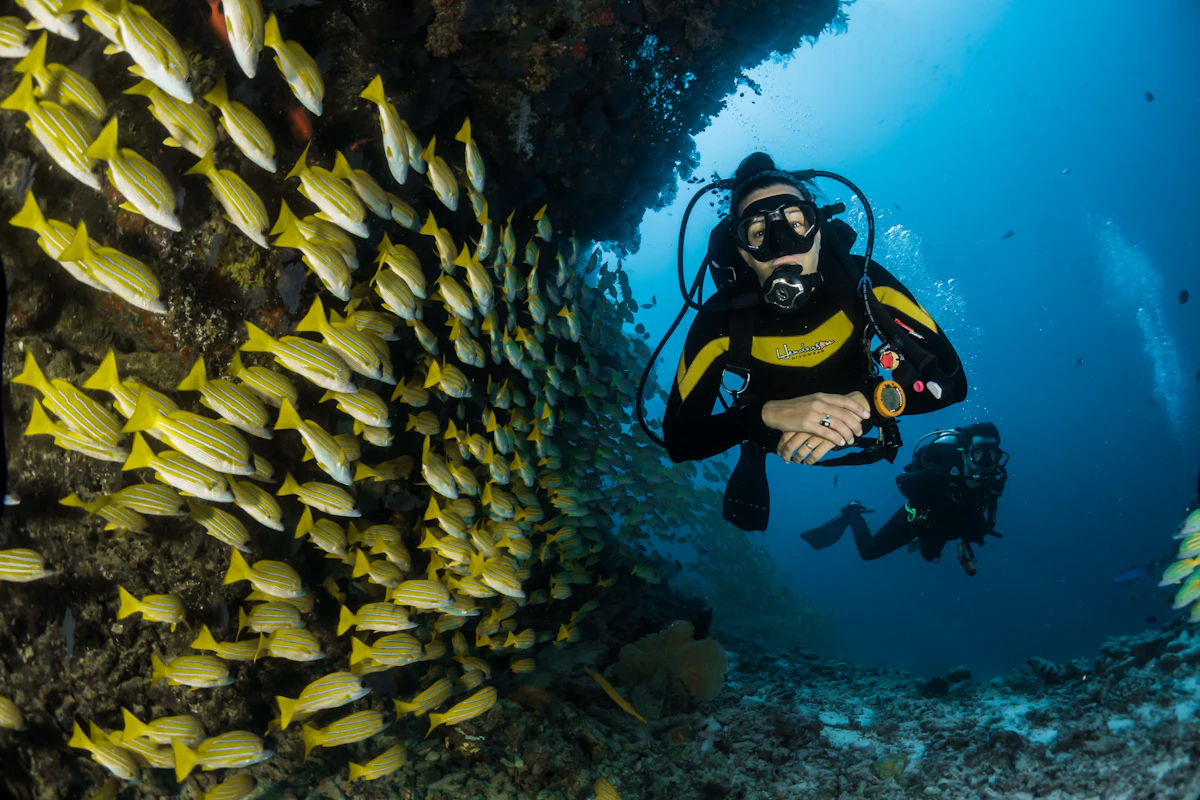
Marine wildlife diving at Sail Rock, Koh Phangan

Koh Phangan's wildlife exists in two registers that most visitors experience separately — and often miss the second entirely. The marine world gets the attention: Sail Rock, the lone pinnacle rising from the open Gulf between Koh Phangan and Koh Tao, is one of Thailand's more talked-about whale shark sites, and the reef at Koh Ma on the northwest corner is the island's most accessible coral snorkelling. Those are the wildlife encounters most people plan around.

The jungle interior is the one they stumble on. Much of Koh Phangan's hilly spine remains forested — densest around Khao Ra at 627 metres — and it is genuinely biodiverse. Long-tailed macaques move through the canopy and gather at viewpoints. Monitor lizards forage unhurriedly on the forest floor. Oriental pied hornbills announce themselves with a call that carries through the trees before you spot them. The Than Sadet waterfall trail in the northeast, running through one of the island's most protected stretches of jungle, is particularly good for birdsong at first light. Neither category of wildlife requires a specialist tour: a dive boat from Chaloklum gets you to Sail Rock, a walk across the Mae Haad sandbar gets you to Koh Ma, and a scooter into the interior gets you started on most jungle encounters.
Wildlife encounters on the island

Chaloklum · Open Gulf · Boat dive

Whale sharks at Sail Rock

Sail Rock (Hin Bai) — the lone granite pinnacle roughly midway between Koh Phangan and Koh Tao — is one of the Gulf of Thailand's more reliable spots for whale shark sightings. The site's deep, open-water position and the dense baitfish that concentrate around the pinnacle make it attractive to large pelagics. Sightings happen often enough to be a genuine draw, but they are never guaranteed on any individual dive: the sharks move on their own schedule. Dive-shop consensus puts the loosely better window around March to May and August to October, though encounters can happen at any time of year. Go for the Chimney swim-through and the schooling barracuda; treat a whale shark as a wonderful bonus.

Sail Rock dive guide →
Mae Haad · Northwest coast · Shore entry

Reef fish & marine life at Koh Ma

Koh Ma is a small islet off Mae Haad beach, connected to the shore by a natural sandbar that appears at low tide. The reef wrapping around the islet is the island's best accessible snorkelling without a boat: healthy coral and a steady population of reef fish in clear water. The site is a protected marine area — no touching coral, no removing shells. For snorkellers rather than divers, this is the closest Koh Phangan gets to a guaranteed wildlife encounter in the water. Angthong Marine Park day trips offer more dramatic settings further afield, but Koh Ma's reef is the one you can walk to.

Koh Ma reef & sandbar guide →
Khao Ra · Jungle trails · Year-round

Macaques, monitor lizards & jungle interior

Koh Phangan's forested interior — most dense around the 627-metre peak of Khao Ra in the north — is home to wildlife that most beach visitors never see. Long-tailed macaques move through the canopy and gather around viewpoints and picnic areas; monitor lizards forage slowly across the jungle floor. Both species are habituated to hikers on the main trails to waterfalls and viewpoints. Don't feed the macaques — human food is nutritionally wrong for them and feeding makes them bold and aggressive toward future visitors. Observe quietly and keep a respectful distance from both species.

Jungle hiking & trails hub →
Than Sadet · Forest interior · Early morning

Hornbills & jungle birdlife

The jungle interior and the Than Sadet national park on the northeast coast are the island's richest bird habitats. Oriental pied hornbills — large, unmistakable birds with curved bills and striking markings — are the most charismatic residents of the island's tree canopy. The forest soundtrack of birdsong is constant in the mornings, particularly on the trails to the Than Sadet waterfall, which run through one of the island's most intact stretches of tropical jungle. Go early, move quietly and bring binoculars if birdwatching is a priority.

Than Sadet waterfall & trail guide →
Dive trips, reefs & jungle treks

Book a wildlife experience

From Sail Rock dive trips out of Chaloklum to Koh Ma snorkelling and Than Sadet jungle treks — the island's top wildlife-focused operators.

All activities →

Koh Phangan wildlife, answered

Can you see whale sharks at Koh Phangan?
+
Whale sharks are seen at Sail Rock (Hin Bai), a dive site roughly midway between Koh Phangan and Koh Tao, accessible on day trips from Chaloklum on the north coast. Sail Rock is considered one of the Gulf of Thailand's more reliable locations for encounters with whale sharks — the site's position in open, deep water and the concentration of baitfish around the pinnacle attract large pelagics. That said, sightings are never guaranteed: the sharks move on their own schedule, and no reputable dive operator will promise one. The better window is loosely March to May and August to October, though encounters happen outside these months too. Experienced Sail Rock divers advise going for the dive itself — the Chimney, the fish schools and the dramatic walls — and treating a whale shark as a bonus.
Where is the best wildlife snorkelling on Koh Phangan?
+
Koh Ma on the northwest corner is the island's top shore-entry snorkelling spot, with healthy coral reef wrapping around the islet and accessible at low tide via a natural sandbar from Mae Haad beach. The reef holds a good range of reef fish in clear water without requiring a boat or dive certification. Haad Salad's rocky headlands also have accessible snorkelling. For a more dramatic underwater environment — with bigger formations and denser marine life — a day trip to Ang Thong National Marine Park offers snorkelling between limestone karst islands roughly 30 kilometres southwest of the island.
Are there monkeys on Koh Phangan?
+
Yes. Long-tailed macaques live throughout the island's forested interior and are commonly seen on jungle trails, at viewpoints and near the waterfalls in the interior. They are habituated to hikers and can appear surprisingly close. The important rule is not to feed them: human food is nutritionally unsuitable for macaques, and a population used to being fed becomes bolder and more aggressive, which harms both the animals and future visitors. Observe without feeding and keep a respectful distance.
What other wildlife lives in the jungle interior?
+
Beyond macaques, Koh Phangan's jungle holds monitor lizards — large, slow-moving reptiles that forage on the forest floor and are harmless when not cornered — and a rich bird population including oriental pied hornbills, whose large curved bills and loud calls make them hard to miss in the tree canopy. The interior around Khao Ra (627 metres, the island's highest peak) and the Than Sadet national park on the northeast coast are the richest habitats. The birdsong on early-morning trails to Than Sadet waterfall, through some of the most intact tropical jungle on the island, is striking even to non-birdwatchers.
Is it safe to encounter wildlife in the jungle?
+
The jungle wildlife on Koh Phangan poses no real danger to hikers who behave sensibly. Monitor lizards look impressive but move away when approached and do not attack unless cornered or provoked. Macaques can scratch or bite if they associate a person with food — another reason not to feed them. Stay on marked trails, especially in the wet season when paths are slippery. For longer jungle routes such as the Khao Ra ascent, a local guide is advisable for navigation as well as animal knowledge. Sea urchins are the most common wildlife hazard for water activities — wear footwear on rocky entries and exits.
When is the best time to see wildlife on Koh Phangan?
+
Marine wildlife — particularly whale shark encounters at Sail Rock — is loosely better around March to May and August to October, but can be seen year-round. Reef fish at Koh Ma are visible year-round; visibility is clearest November to April. Jungle wildlife (macaques, monitor lizards, hornbills) is present throughout the year and is not strongly seasonal — early mornings on jungle trails are the best time for birdlife, before the midday heat quietens the canopy.

Explore further

Guide

Diving & Snorkelling on Koh Phangan

Koh Phangan is the quiet gateway to Sail Rock, the Gulf of Thailand's best dive site, with a whale-shark pinnacle and a famous swim-through chimney. Here's the dive scene, day trips, PADI courses and the snorkelling spots that are worth your time.

Read guide →
Guide

Best Snorkelling Spots on Koh Phangan

Koh Phangan has more shore-entry snorkelling than its party reputation suggests — from the protected Koh Ma reef in the northwest to Coral Bay on the north coast and the fringing reef at Haad Salad. This guide ranks the best spots by quality, access and what to expect in the water.

Read guide →
Guide

Waterfalls, Viewpoints & the Jungle Interior

Past the beaches, Koh Phangan keeps a wild green heart: royal waterfalls where Thai kings carved their initials, the 627m summit of Khao Ra, hilltop temples and lookouts. Here is how to reach them safely, and exactly when they run their best.

Read guide →
Guide

Hiking on Koh Phangan: Trails, Waterfalls & Jungle Walks

Koh Phangan's forested interior hides some of the Gulf of Thailand's most rewarding short hikes — the island's highest summit at Khao Ra, royal waterfalls in a national park, jungle ridgelines and a hidden north-coast beach reachable only on foot or by boat.

Read guide →
Guide

Island Hopping & Day Trips from Koh Phangan

Koh Phangan's central position in the Gulf of Thailand puts Koh Tao, Ang Thong Marine Park and Koh Samui all within a day-trip's reach. Here's where to go, what you'll find, and how to book each trip.

Read guide →

Wildlife encounters at a glance

From whale sharks in open water to hornbills in the forest canopy — how Koh Phangan's main wildlife encounters compare on location, access and timing.

Koh Phangan wildlife encounters compared
EncounterLocationHow to see itBest timingNotes
Whale sharksSail Rock (Hin Bai), open GulfBoat dive from Chaloklum (1 hr crossing); PADI Open Water minimumMar–May and Aug–Oct loosely better; possible year-roundNever guaranteed — go for the dive, treat sharks as a bonus
Schooling barracuda & trevallySail Rock — walls and chimneySame dive boat from ChaloklumYear-round; dry season (Nov–Apr) for best visibilityDense schools around the pinnacle at 10–30 m; reliable encounter
Reef fish & coralKoh Ma reef, Mae HaadWalk the sandbar at low tide; shore snorkel — no boat neededYear-round; visibility peaks Nov–AprProtected marine area — no touching coral or removing shells
Macaques (long-tailed)Jungle interior, viewpointsJungle hike or scooter to interior viewpointsYear-roundDo not feed — it harms the animals and makes them aggressive
Monitor lizardsJungle floor, interior trailsJungle hike; they are often seen on or near the trailYear-roundHarmless unless cornered — give them space and they move off
Oriental pied hornbillsTree canopy, Than Sadet & Khao RaEarly-morning jungle walk; listen for the distinctive callYear-round; early morning bestLarge, striking birds — the most charismatic of the island's birds

Whale shark sightings are never guaranteed — Sail Rock is one of the Gulf's more reliable spots, but the sharks move on their own schedule. Jungle wildlife is present year-round; early mornings on quiet trails are best for birdlife.

Plan your wildlife day

Live · weather & clocks

Koh Phangan

HQ

Thailand

--:--:--

–°

Berlin

Germany

--:--:--

–°

New York

USA

--:--:--

–°

Bali

Indonesia

--:--:--

–°

Sydney

Australia

--:--:--

–°